
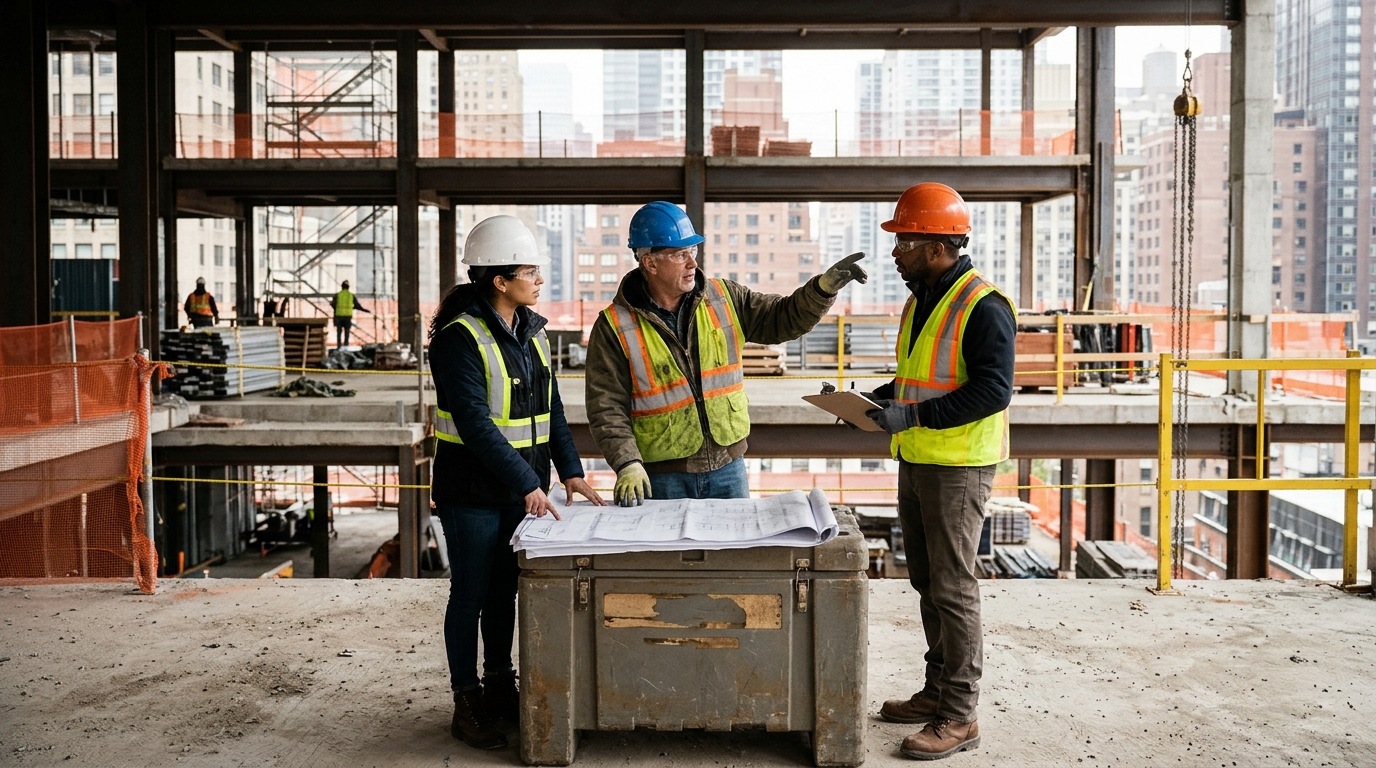
Construction site accidents can involve several companies working on the same project. General contractors, specialty subcontractors, equipment suppliers, and outside service providers often perform different tasks in shared work areas. When an accident occurs, determining which company was responsible can become a complicated legal issue.
In New York, a subcontractor may face liability when its negligent conduct causes a workplace injury. Some subcontractors may also qualify as statutory agents under Labor Law §§ 240(1) and 241(6) when they have been delegated sufficient authority over the work that caused the accident.
However, not every subcontractor is legally responsible for every injury on a construction site. The subcontractor’s actual duties, contractual authority, control over the work, and relationship to the injured worker must be examined.
Quick Answer
Can an injured construction worker sue a subcontractor in New York?
Yes. An injured construction worker may pursue a claim against a subcontractor when that company owes and breaches an applicable legal duty and its conduct causes the injury.
A subcontractor may also face liability under New York Labor Law §§ 240(1) or 241(6) if it qualifies as a statutory agent with delegated authority over the injury-producing work.
However, workers’ compensation generally restricts ordinary personal injury lawsuits against the injured worker’s own covered employer. A subcontractor’s legal responsibility therefore depends on its role, authority, negligence, and relationship to the injured person.
Key Takeaways
- Subcontractor Responsibility: A subcontractor may face liability when negligent work, equipment, or safety practices cause another worker’s injury.
- Statutory Agency: Certain subcontractors may be liable under Labor Law §§ 240(1) and 241(6) when they have sufficient delegated authority over the injury-producing work.
- Property Owner Duties: Covered owners and general contractors may have nondelegable duties even when a subcontractor performs the work.
- Labor Law § 200: Ordinary construction negligence claims often require evidence of relevant supervision, control, creation of a dangerous condition, or notice.
- Workers’ Compensation: An injured employee generally cannot bring an ordinary negligence lawsuit against their covered employer, but qualifying third-party claims may remain available.
- Employer Indemnification: Workers’ Compensation Law § 11 restricts certain claims against an injured worker’s employer unless narrow statutory or contractual requirements are met.
- Evidence: Subcontracts, site safety records, photographs, witness statements, and equipment documentation can help identify the responsible parties.
- Filing Deadlines: Workers’ compensation and third-party personal injury claims have separate procedural requirements and deadlines.
What Is Subcontractor Liability in a Construction Accident?
Subcontractor liability concerns the legal responsibility of a company hired to perform a particular portion of a construction project.
A general contractor may oversee the overall project while assigning specialized work to electrical, plumbing, steel, roofing, excavation, or other subcontractors.
These companies may operate equipment, employ workers, supervise assigned tasks, and control particular work areas.
An injury claim may arise when a subcontractor’s conduct creates a dangerous condition or when the subcontractor has a legally recognized responsibility to protect workers from a particular hazard.
How Is a Subcontractor Different From a General Contractor?
A general contractor generally has broader responsibility for organizing or performing the construction project.
A subcontractor is typically hired to perform a defined portion of that work.
For example, a general contractor overseeing a building renovation may hire separate subcontractors for electrical installation, roofing, concrete work, and mechanical systems.
However, legal responsibility is not determined solely by the title used in a contract.
The actual authority to supervise work, enforce safety requirements, and select or control other subcontractors may affect whether a company qualifies as a contractor or statutory agent under New York law.
Can Multiple Contractors Share Responsibility?
Yes.
A construction accident may involve overlapping responsibilities.
For example, a subcontractor may negligently operate a forklift while a covered property owner or general contractor has separate statutory duties regarding the worksite.
In appropriate circumstances, the injured person may pursue claims against more than one legally responsible party.
However, each defendant’s liability must be established under the applicable legal standard.
Does Working on the Same Jobsite Establish Liability?
No.
A subcontractor does not automatically become responsible for injuries caused by another company’s work simply because both companies were present at the construction site.
The injured person must identify a relevant duty, negligent conduct or statutory responsibility, and a causal connection to the injury.
What Construction Accidents Can Involve Subcontractor Liability?
Subcontractors work in many areas of a construction project, including elevated platforms, excavation sites, partially completed structures, and equipment operating zones.
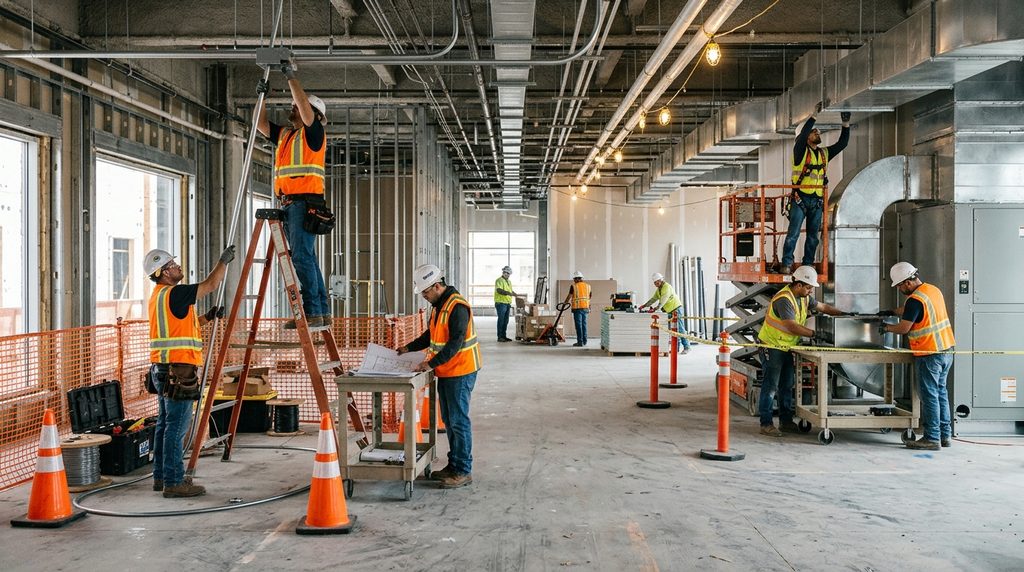
Different accident types can involve different legal responsibilities.
Scaffold and Ladder Accidents
Subcontractors may erect scaffolding, provide ladders, supervise elevated work, or perform activities requiring fall protection.
Potential hazards include:
- Unstable scaffolding
- Inadequately secured ladders
- Missing guardrails
- Defective platforms
- Improperly installed scaffold components
- Inadequate fall-arrest systems
- Unsafe access between levels
- Equipment that shifts during normal use
A claim may involve the company responsible for the equipment, the parties with authority over the work, and other defendants subject to Labor Law § 240(1).
However, a subcontractor that merely supplied or erected equipment is not necessarily a statutory agent for every injury involving that equipment.
Falling Object Accidents
Construction materials may fall from elevated platforms, cranes, hoists, or other equipment.
Potential incidents include:
- Steel beams falling during installation
- Pipes becoming dislodged
- Materials falling from scaffolds
- Improperly secured loads
- Tools dropping from elevated work areas
- Structural components falling during demolition
A subcontractor may face liability when negligent material handling, equipment operation, or safety practices cause the accident.
Labor Law § 240(1) may also apply to certain objects being hoisted or requiring securing for the work.
Excavation Accidents
Excavation subcontractors may perform trenching, digging, shoring, and earthmoving work.
Potential hazards include collapsing excavation walls, inadequate supports, unstable surfaces, and unsafe operation of excavation machinery.
Liability may depend on the subcontractor’s conduct and applicable construction safety requirements.
Electrical Accidents
Electrical subcontractors install, repair, and maintain electrical systems.
An accident may involve exposed wiring, improperly installed components, unexpected energization, or other hazardous conditions.
Determining liability requires identifying who controlled the electrical work, what safety requirements applied, and how the injury occurred.
Crane and Heavy Equipment Accidents
Subcontractors may operate cranes, forklifts, excavators, loaders, and other heavy machinery.
Potential accidents include:
- Workers struck by equipment
- Falling equipment loads
- Forklift collisions
- Improper rigging
- Uncontrolled suspended materials
- Equipment tipping
- Unsafe lifting operations
- Unexpected mechanical movement
These incidents may involve negligent equipment operation, statutory construction safety duties, or product liability claims.
Unsafe Walkways and Work Areas
Construction subcontractors may leave materials, debris, equipment, or other obstructions in shared workspaces.
Examples include loose cables, construction waste, slippery surfaces, and improperly stored materials.
A worker injured by these conditions may have a claim when a subcontractor created the hazard or otherwise breached an applicable duty.
What Does New York Labor Law § 240(1) Require?
New York Labor Law § 240(1) establishes special protections for workers exposed to qualifying elevation-related hazards.
The statute applies to specified activities involving the erection, demolition, repairing, altering, painting, cleaning, or pointing of buildings or structures.
Covered property owners, contractors, and their agents must provide appropriate protective devices.
What Safety Equipment Does Section 240(1) Address?
The statute identifies equipment including scaffolds, hoists, ladders, slings, ropes, braces, pulleys, and other safety devices.
These devices must be properly constructed, positioned, and operated to provide adequate protection.
The New York State Senate’s Labor Law § 240 establishes the requirements.
Can a Subcontractor Be Liable Under Section 240(1)?
Yes, when the subcontractor qualifies as a statutory agent.
This generally requires sufficient delegated authority to supervise and control the work or area giving rise to the injury.
For example, a steel erection subcontractor with authority over the installation work may qualify as a statutory agent for an accident arising from that work.
However, a subcontractor that performs unrelated work or lacks sufficient authority over the relevant activity may not qualify.
Must a Subcontractor Personally Supervise the Injured Worker?
Not necessarily.
Statutory agency may depend on the right to exercise the required control, rather than whether the subcontractor actually exercised that authority.
A subcontractor cannot necessarily avoid statutory responsibility simply by delegating the injury-producing work to another company after accepting sufficient supervisory authority.
The applicable contract and actual project arrangements must be reviewed.
Does Section 240(1) Apply to Every Construction Accident?
No.
The accident must involve a qualifying elevation-related hazard and a statutory safety-device failure that caused the injury.
An ordinary ground-level trip over debris does not automatically become a Section 240(1) claim because it occurred on a construction site.
Other negligence or Labor Law provisions may apply.
Is Section 240(1) Absolute Liability?
Section 240(1) can impose absolute liability on covered defendants when a violation of the statute proximately causes the injury.
However, the claimant must first establish that the statute applies and that inadequate safety protection contributed to the accident.
The statute does not guarantee compensation for every construction injury.
When Is a Subcontractor Considered a Statutory Agent?
Statutory agency is one of the most important issues in subcontractor liability litigation.
New York courts distinguish companies that merely perform a task from those that have been delegated sufficient authority over the injury-producing work.
What Does Delegated Authority Mean?
Delegated authority refers to a contractual or otherwise established responsibility to supervise and control relevant construction activities.
For example, a subcontractor may be responsible for directing steel installation, managing the workers performing that installation, and implementing required safety precautions.
That authority may support statutory agency.
Does the Subcontract Need to Mention Safety?
Contract language can be important, but a general promise to comply with safety laws does not automatically establish statutory agency.
The court may examine whether the subcontractor actually received authority to control the work area or activity that caused the injury.
A contractual obligation to follow safety requirements is different from authority to supervise another company’s work.
What If the Subcontractor Hires Another Subcontractor?
A company that accepts sufficient supervisory authority does not necessarily escape statutory agency by delegating the work to a lower-tier subcontractor.
The original subcontractor’s contractual authority may remain legally significant.
What If the Subcontractor Only Supplies Equipment?
Supplying equipment does not automatically establish statutory agency.
The supplier’s potential liability may instead depend on negligent installation, defective equipment, contractual obligations, or another recognized legal duty.
The ability to supervise the injury-producing activity is particularly important when determining statutory agency under Sections 240(1) and 241(6).
What Evidence Establishes Statutory Agency?
Relevant evidence may include:
- General contracts
- Subcontracts
- Scope-of-work descriptions
- Safety responsibility provisions
- Authority to direct workers
- Authority to stop unsafe work
- Responsibility for selecting lower-tier subcontractors
- Site supervision records
- Deposition testimony
- Communications about the accident-producing task
No single document necessarily resolves every issue.
How Is Labor Law § 241(6) Different From Section 240(1)?
Labor Law § 241(6) establishes additional safety duties for covered construction, excavation, and demolition activities.
It requires owners, contractors, and qualifying agents to comply with applicable safety regulations.
However, the claim generally must be based on a sufficiently specific provision of New York’s Industrial Code.
What Is the New York Industrial Code?
The Industrial Code establishes safety requirements for many construction activities.
Part 23 includes provisions addressing working surfaces, ladders, scaffolds, excavation, power-operated equipment, and other hazards.
A particular regulation may become relevant when an accident involves an unsafe condition addressed by that provision.
Must the Regulation Be Specific?
Yes.
A Section 241(6) claim generally requires a sufficiently specific and applicable regulation that sets out a concrete safety requirement.
A broad statement directing employers to maintain safe conditions may not support the claim.
The claimant must also establish that the violation contributed to the injury.
Can a Subcontractor Be Liable Under Section 241(6)?
Yes, when it qualifies as a statutory agent or otherwise falls within the applicable statutory categories.
As with Section 240(1), delegated authority over the injury-producing work can be important.
However, a subcontractor’s ordinary contractual involvement does not automatically establish statutory liability.
Can Comparative Negligence Apply?
Comparative negligence may be relevant to a Section 241(6) claim.
This differs from an established Section 240(1) violation, for which ordinary comparative negligence is not a defense.
The injured worker’s conduct and the defendant’s statutory obligations must be considered under the applicable legal framework.
What Is Labor Law § 200 and How Does It Affect Subcontractors?
Labor Law § 200 reflects New York’s general duty to provide reasonably safe working conditions.
It is closely associated with common-law negligence principles.
The analysis generally distinguishes accidents caused by dangerous premises conditions from those arising from the methods used to perform construction work.
Accidents Involving Unsafe Work Methods
When an accident results from the manner in which work was performed, liability generally depends on relevant supervisory control over that work.
For example, a subcontractor may negligently direct a forklift operator to move a load through an area occupied by other workers.
The injured person’s claim may depend on whether the subcontractor exercised the necessary control and whether its conduct caused the accident.
Accidents Involving Dangerous Conditions
When an accident results from a dangerous premises condition, the relevant questions may include whether the defendant created the hazard or had actual or constructive notice of it.
For example, a subcontractor may leave debris in a shared passageway.
The responsible party’s conduct and control of the condition may become important.
Does General Safety Oversight Establish Liability?
Not automatically.
The authority to conduct routine safety inspections or report hazards may be different from the authority to direct the particular work that caused an accident.
The law examines the defendant’s role in the injury-producing activity.
How Do These Laws Differ?
| Legal Basis | Potentially Responsible Parties | Main Requirement |
| Labor Law § 240(1) | Covered owners, contractors, and statutory agents | A qualifying elevation-related safety violation caused the injury |
| Labor Law § 241(6) | Covered owners, contractors, and statutory agents | A specific applicable Industrial Code violation contributed to the injury |
| Labor Law § 200 | Parties with relevant legal duties | Negligence involving appropriate control, hazard creation, or notice |
| Common-Law Negligence | Parties owing an independent duty | Duty, breach, causation, and damages |
| Product Liability | Appropriate manufacturers or other commercial defendants | A legally actionable product defect caused the injury |
A construction accident may involve several of these theories, but each must be separately established.
What Do New York Courts Say About Subcontractor Liability?
New York appellate decisions demonstrate why contractual authority, actual supervision, and workers’ compensation restrictions can affect which companies are legally responsible.
Rojas v. 616 First Avenue, LLC (2026)
In Rojas v. 616 First Avenue, LLC, decided January 14, 2026, a construction worker fell approximately nine feet while performing work inside a building.
The worker was wearing a harness, but the lifeline extended too far to stop his fall before he reached the floor.
The worker pursued claims against the building owner and a company alleged to have been functioning as the general contractor.
The Appellate Division, Second Department determined that the worker had established liability under Labor Law § 240(1) and an applicable Industrial Code provision supporting Section 241(6).
The court also examined whether the construction company qualified as a general contractor.
Its contractual duties included arranging workers and equipment, supervising trade contractors, closely overseeing concrete and steel operations, and enforcing safety precautions.
The court concluded that these responsibilities established the company’s status as a contractor subject to the relevant Labor Law provisions.
The decision demonstrates why the actual authority described in construction contracts can be more important than a company’s preferred description of its role.
The official decision in Rojas provides the court’s analysis.
Rogers v. DS Restoration & Residential Services Co. (2026)
In Rogers v. DS Restoration & Residential Services Co., decided February 11, 2026, a worker was injured during work involving a residential gutter.
The defendants argued that they were not contractors within the meaning of Labor Law §§ 240(1) and 241(6).
The worker had agreed verbally to assist another person with the job and would be paid for his work.
The Appellate Division, Fourth Department determined that factual questions remained concerning whether the defendants had sufficient authority to exercise control over the work.
The court explained that contractor status may depend on the right to exercise control, not necessarily whether that control was actually exercised.
The case illustrates why the absence of a detailed written contract does not automatically resolve a construction company’s legal status.
The official decision in Rogers explains the relevant principles.
Phillips v. Bast Hatfield Construction, LLC (2025)
In Phillips v. Bast Hatfield Construction, LLC, decided January 29, 2025, a union ironworker was injured after falling approximately 25 feet from a steel beam during construction.
The project involved a general contractor, construction manager, steel subcontractor, and lower-tier subcontractor that employed the worker.
The Supreme Court, Albany County examined which companies qualified as statutory defendants.
The court determined that the steel subcontractor had received authority to supervise and control the relevant steel installation work.
That authority was sufficient to establish its status as a statutory agent under Labor Law §§ 240(1) and 241(6), even though the company had delegated some work to a lower-tier subcontractor.
However, the court determined that the construction manager did not have sufficient supervisory authority over the injury-producing work to qualify as a statutory agent.
The decision also distinguished contractual authority sufficient for statutory agency from the actual supervision required for certain common-law indemnification claims.
As a trial-level decision, the ruling is an illustration of the applicable principles rather than a statewide appellate holding.
Wheeler v. BrandSafway Industries, LLC (2025)
In Wheeler v. BrandSafway Industries, LLC, decided in 2025, the Appellate Division, Fourth Department considered whether a scaffolding subcontractor qualified as a statutory agent.
The parties agreed that the subcontractor did not have authority to supervise or control the injured worker or the worker’s activities.
The opposing parties relied on a contractual provision requiring compliance with applicable safety laws.
However, the appellate court determined that this provision did not delegate authority to supervise or control the relevant worksite activities.
The decision illustrates why providing scaffolding services or agreeing to follow safety regulations does not automatically make a subcontractor a statutory agent.
Hart v. Theatre Three Productions, Inc. (2026)
In Hart v. Theatre Three Productions, Inc., decided March 4, 2026, the Appellate Division, Second Department addressed claims arising after a boiler fell on an employee.
The property-related defendant sought contribution and indemnification from the injured worker’s employer, a plumbing company.
The plumbing company argued that Workers’ Compensation Law § 11 barred the third-party claims.
The appellate court agreed that the allegations did not establish a qualifying grave injury and that the relevant agreement did not contain an enforceable express indemnification obligation.
The court concluded that the third-party complaint against the employer should have been dismissed.
The ruling illustrates the restrictions that may apply when another defendant attempts to shift liability to the injured worker’s employer.
The official decision in Hart provides the court’s reasoning.
What Do These Decisions Demonstrate?
These cases establish several important considerations:
- Contractual Authority Matters: A company’s right to control injury-producing work may establish statutory responsibility.
- Titles Are Not Determinative: A subcontractor, construction manager, or contractor must be evaluated according to its actual legal role.
- Safety Clauses Have Limits: A general promise to follow safety rules does not automatically establish statutory agency.
- Lower-Tier Subcontracting Matters: Delegating work does not necessarily eliminate an earlier subcontractor’s statutory obligations.
- Actual Supervision Matters: Common-law negligence and indemnification theories may involve different requirements from statutory agency.
- Employer Immunity Matters: Workers’ compensation may restrict attempts to recover contribution or indemnification from the injured worker’s employer.
- Claims Require Separate Analysis: A party may be liable under one legal theory but not another.
Can a Worker Sue Another Subcontractor After a Jobsite Injury?
Potentially, yes.
An employee generally receives workers’ compensation through their own employer, but that does not automatically prevent a claim against another subcontractor.
For example, an electrician employed by one company may be injured when a separate excavation subcontractor negligently operates heavy equipment.
If the excavation company owed and breached a legal duty, a third-party claim may be available.
What If the Other Subcontractor Created the Hazard?
A subcontractor may face liability when it negligently creates a dangerous condition.
Examples include leaving an unsafe opening, operating equipment improperly, or creating an obstruction in a shared work area.
The claimant must establish that the conduct caused the injuries.
What If the Subcontractor Controlled the Work?
Control can become important when an accident results from the manner in which work was performed.
For example, a subcontractor directing a hazardous lifting operation may owe relevant duties concerning that operation.
The analysis depends on the specific legal theory.
What If the Subcontractor Was Performing Unrelated Work?
A subcontractor that had no involvement in the hazard, no relevant control, and no applicable legal duty may not be responsible.
The fact that the company worked on the same project is not enough.
Can an Injured Worker Sue Their Own Subcontractor Employer?
Usually, not through an ordinary negligence lawsuit when the employer is covered by New York workers’ compensation.
Workers’ Compensation Law § 11 generally makes workers’ compensation the exclusive remedy against a covered employer for injuries arising out of and in the course of employment.
What Does Workers’ Compensation Exclusivity Mean?
Exclusivity means that qualifying workers generally receive statutory benefits rather than pursuing an ordinary negligence lawsuit against their employer.
Benefits may include necessary medical treatment, partial wage replacement, and certain disability benefits.
The employer’s negligence generally does not have to be established to qualify for benefits.
Are There Exceptions?
Yes.
For example, an employer’s failure to secure required workers’ compensation coverage may affect the injured employee’s legal options.
Certain other statutory exceptions and specialized circumstances may also apply.
The specific employment relationship and insurance status must be established.
Can the Worker Sue the General Contractor Instead?
Potentially, yes.
A general contractor may have separate statutory or common-law responsibility for the injury.
Workers’ compensation exclusivity generally does not eliminate every claim against a third party.
However, the general contractor’s liability must be established under the applicable law.
What About Injuries Caused by Coworkers?
Workers’ Compensation Law § 29(6) generally restricts personal injury claims against coworkers acting within the scope of the same employment.
However, claims involving workers employed by different companies may require different analysis.
What Is Third-Party Liability in a Construction Accident?
Third-party liability concerns a legal claim against someone other than the injured worker’s covered employer who contributed to the accident.
Construction projects frequently involve multiple companies, making these claims particularly important.
How Does Third-Party Liability Work?
Consider an illustrative situation:
An electrician employed by a subcontractor is injured when a forklift operated by an employee of a separate materials company strikes a work platform.
The electrician may qualify for workers’ compensation through the electrical subcontractor’s coverage.
A separate negligence claim may also be available against the materials company if its operator’s negligent conduct caused the injury.
Depending on the circumstances, claims against additional defendants may also be possible.
Does a Third-Party Claim Require Proof of Negligence?
Ordinary third-party negligence claims generally require proof of duty, breach, causation, and damages.
However, certain construction claims under Labor Law § 240(1) or § 241(6) involve specialized statutory duties.
A claim’s requirements depend on the legal theory.
Can Multiple Third Parties Be Responsible?
Yes.
For example, a defective lifting system may involve a negligent equipment operator, an outside maintenance provider, and a manufacturer.
The claimant must establish an appropriate legal basis for responsibility against each defendant.
Understanding third-party liability in industrial accidents provides additional context about claims against companies other than an injured worker’s employer.
Can a General Contractor Seek Indemnification From a Subcontractor?
Yes, in certain circumstances.
Indemnification generally concerns one party’s right to require another party to reimburse it for specified liability or losses.
Construction contracts frequently contain indemnification provisions.
However, New York places important restrictions on these agreements.
What Is Contractual Indemnification?
Contractual indemnification is based on an agreement establishing responsibility for specified losses.
For example, a subcontract may require the subcontractor to indemnify another party for certain injuries arising from the subcontractor’s negligent work.
Whether the provision applies depends on its wording and the relevant facts.
What Is Common-Law Indemnification?
Common-law indemnification may be available when one party is held vicariously liable without being personally negligent and another party’s wrongdoing actually caused the injury.
The party seeking indemnification must establish the applicable requirements.
Contractual authority alone is not always sufficient to establish common-law indemnification against a party that did not actually supervise the relevant work.
What Does Workers’ Compensation Law § 11 Require?
Workers’ Compensation Law § 11 limits certain contribution and indemnification claims against an injured worker’s employer.
A third party generally cannot recover contribution or common-law indemnification from the employer unless the worker suffered a statutorily defined grave injury.
The statute separately recognizes certain express contractual indemnification obligations.
The New York Workers’ Compensation Law § 11 establishes these restrictions.
What Is a Grave Injury?
The statute defines grave injury narrowly.
Its specified categories include death, certain amputations or permanent total loss of use, paraplegia or quadriplegia, and other severe conditions.
The list is exclusive.
An injury may be medically serious, permanently disabling, or financially devastating without satisfying the statutory definition of grave injury.
Importantly, the grave injury requirement generally concerns certain claims for contribution or indemnification against an employer. It is not a general requirement for an injured worker to pursue a valid claim against an unrelated third-party defendant.
Does a Construction Contract Automatically Require Indemnification?
No.
The court must determine whether a valid indemnification obligation exists and applies to the accident.
New York General Obligations Law § 5-322.1 generally prohibits certain construction agreements that purport to indemnify a party for liability arising from that party’s own negligence.
The contract’s wording, the parties’ conduct, and applicable statutes must be considered.
What Evidence Is Important in a Subcontractor Liability Claim?
Subcontractor liability claims often require more than photographs of the accident location.
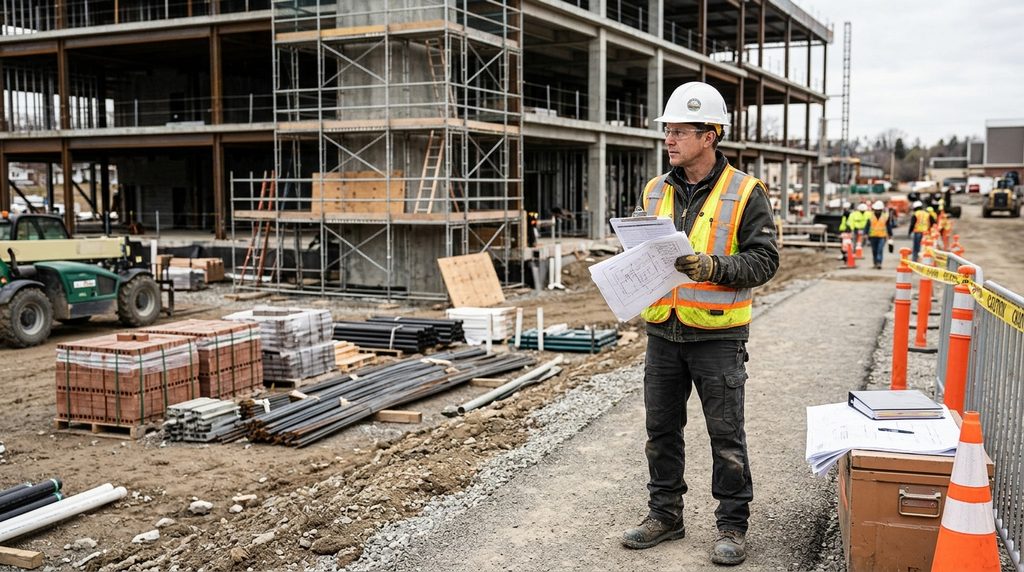
The investigation may need to establish the relationships among several companies and identify which party controlled the activity that caused the injury.
| Evidence | Why It Matters |
| General Construction Contract | Helps establish the general contractor’s responsibilities |
| Subcontracts | Defines work assignments, authority, and safety obligations |
| Lower-Tier Subcontracts | May identify delegated duties and additional companies |
| Accident Scene Photographs | Documents the hazard and accident location |
| Incident Reports | Records initial observations and circumstances |
| Site Safety Plans | Helps identify required safety procedures |
| Daily Jobsite Reports | May show which companies were working in the area |
| Equipment Inspection Records | May identify defects or inadequate maintenance |
| Witness Statements | Provides information about supervision and accident causation |
| Foreman and Supervisor Testimony | May establish who directed the work |
| Training Records | May identify equipment and safety instructions |
| Surveillance Footage | May document the accident sequence |
| Medical Records | Establishes injuries and treatment |
| Financial Documentation | Supports lost earnings and other damages |
Construction Contracts
Contracts can identify the general contractor, subcontractors, lower-tier subcontractors, and their respective scopes of work.
They may also establish authority to supervise tasks, enforce safety procedures, or hire additional companies.
Worksite Communications
Emails, text messages, daily reports, and supervisor instructions may identify who controlled the injury-producing activity.
These documents may become particularly important when the parties disagree about responsibility.
Accident Scene Photographs
Photographs may show defective equipment, unsafe materials, missing guardrails, or dangerous work areas.
The exact condition should be documented when safe.
Equipment Records
Maintenance and inspection reports may reveal whether machinery or safety equipment was defective before the accident.
The responsible company may be identified through ownership and service records.
Witness Statements
Coworkers may know who directed the work, who supplied equipment, and whether safety concerns were reported.
Independent testimony can help resolve disputes about supervision.
Medical Documentation
Medical records establish the injuries, treatment, and resulting limitations.
Relevant evidence may include emergency records, diagnostic imaging, surgery reports, rehabilitation notes, and work restrictions.
What Should a Worker Do After an Accident Involving Subcontractors?
The immediate priorities are personal safety and medical treatment.
After urgent needs are addressed, several steps may help preserve information about the companies and work activities involved.
1. Obtain Medical Attention
Seek emergency care for serious injuries.
Construction accidents may cause fractures, head trauma, spinal injuries, crush injuries, or other medical complications.
2. Notify the Employer
Report the accident to the direct employer or appropriate supervisor.
Workers’ compensation generally requires notice within 30 days, subject to applicable exceptions.
3. Identify the Accident Location
Document the building, floor, work zone, and specific task being performed.
4. Identify the Companies Involved
Record the names of the general contractor, direct employer, and other subcontractors working in the area.
5. Identify Supervisors and Foremen
Document who assigned the work, provided equipment, and directed the activity.
6. Preserve Photographs and Reports
Save photographs, incident documentation, and relevant communications.
7. Identify Witnesses
Collect contact information from workers who observed the accident or knew about the hazardous condition.
8. Preserve Equipment Information
Record equipment identification and relevant safety conditions.
Do not attempt to manipulate or inspect unsafe machinery.
9. Maintain Medical and Financial Records
Keep treatment documents, prescriptions, wage records, and work restrictions.
10. Review Available Legal Claims
Workers’ compensation and third-party lawsuits have different requirements.
Identifying the correct parties and filing deadlines is important.
What Injuries Can Result From Subcontractor-Related Construction Accidents?
Construction injuries can vary according to the equipment, activity, and accident circumstances.
Traumatic Brain Injuries
Falls, equipment strikes, and falling materials may cause concussions or more serious brain injuries.
Some injuries result in lasting neurological limitations.
Spinal Cord Injuries
Falls or heavy equipment accidents may cause spinal fractures, nerve damage, or spinal cord trauma.
Severe cases can lead to permanent disability.
Fractures
Workers may experience fractures involving the arms, legs, wrists, ribs, pelvis, or spine.
Some injuries require surgery and extended rehabilitation.
Crush Injuries
Heavy machinery or falling materials may compress parts of the body.
These injuries can damage bones, muscles, nerves, and blood vessels.
Amputations
Industrial and construction equipment may cause partial or complete amputation injuries.
Treatment may involve rehabilitation, prosthetic devices, and long-term care.
Long-Term Functional Limitations
Severe injuries may prevent a worker from returning to physically demanding employment.
Future earning capacity and continuing medical needs may become important when evaluating damages.
What Compensation May Be Available After a Construction Site Injury?
The available compensation depends on the legal claim, injuries, workers’ compensation benefits, and supporting evidence.
Workers’ Compensation Benefits
Qualifying benefits may include necessary medical treatment, partial wage replacement, and certain permanent disability benefits.
Workers’ compensation generally does not provide a separate pain-and-suffering award in the same manner as a third-party personal injury lawsuit.
Third-Party Medical Damages
An eligible third-party claim may include recoverable medical expenses and future treatment costs.
Applicable reimbursement and lien rules may affect the final distribution.
Lost Earnings
A worker who cannot return to employment may have documented earnings losses.
Recoverability depends on the cause of action and evidence.
Reduced Future Earning Capacity
Permanent injuries may affect the worker’s ability to perform previous job duties.
Future losses generally require medical, vocational, and financial support.
Pain and Suffering
A qualifying third-party personal injury lawsuit may permit compensation for physical pain, emotional distress, and reduced enjoyment of normal activities.
Long-Term Care
Severe injuries may require continuing rehabilitation, mobility equipment, home modifications, or personal assistance.
Wrongful Death Damages
A fatal construction accident may give rise to workers’ compensation death benefits and potentially a separate wrongful death action against legally responsible third parties.
Different rules govern eligibility and recovery.
Can Comparative Negligence Affect a Subcontractor Injury Claim?
Yes, depending on the legal theory.
Ordinary negligence claims and Labor Law § 241(6) claims may involve comparative negligence.
However, Labor Law § 240(1) applies different rules once a statutory safety violation and proximate causation are established.
Comparative Negligence in Ordinary Claims
Under New York CPLR § 1411(a), legally attributable claimant negligence generally reduces recoverable damages in proportion to the claimant’s responsibility.
For example:
| Factor | Illustrative Amount |
| Total Legally Established Damages | $150,000 |
| Injured Worker’s Share of Fault | 20% |
| Comparative Fault Reduction | $30,000 |
| Remaining Damages | $120,000 |
This example illustrates ordinary proportional fault reduction and is not a settlement prediction.
Does Comparative Negligence Apply Under Section 240(1)?
Ordinary comparative negligence is not a defense to an established Section 240(1) violation.
However, a defendant may argue that the worker’s conduct was the sole proximate cause of the accident.
The defense requires a separate legal analysis.
What If Multiple Companies Were Negligent?
Several defendants may share responsibility for an accident.
The applicable legal rules determine how fault, statutory liability, and potential contribution or indemnification issues are resolved.
Workers’ compensation restrictions may also affect whether liability can be shifted to the injured worker’s employer.
Do the 2026 Comparative Negligence Changes Apply?
New York amended CPLR § 1411 in 2026 to establish an additional fault restriction for certain personal injury cases governed by Insurance Law Article 51.
That provision generally concerns qualifying motor vehicle injury claims.
It ordinarily does not govern conventional construction site negligence lawsuits.
The legal theory and applicable statute remain important.
How Long Does Someone Have to File a Subcontractor Injury Claim in New York?
Workers’ compensation claims, third-party negligence lawsuits, and certain public-entity claims follow different deadlines.
Workers’ Compensation Law § 29 also contains special provisions affecting third-party claims and compensation carrier rights.
| Claim or Requirement | General Deadline |
| Report a workplace injury to the employer | Generally within 30 days |
| File a workers’ compensation claim | Generally within two years |
| Ordinary third-party personal injury lawsuit | Generally three years |
| Certain municipal tort claims | Notice of claim generally required within 90 days |
| Covered municipal negligence action | Generally one year and 90 days |
| Certain claims against New York State | Special Court of Claims requirements |
| Wrongful death action | Generally two years, subject to exceptions |
What Is the Workers’ Compensation Reporting Deadline?
New York workers’ compensation generally requires an injured employee to notify the employer within 30 days, subject to statutory exceptions.
Prompt written notification can help document the accident.
What Is the Workers’ Compensation Filing Deadline?
A qualifying workers’ compensation claim generally must be filed within two years.
The New York Workers’ Compensation Board’s filing guidance explains how employees can submit a claim.
What Is the Third-Party Lawsuit Deadline?
CPLR § 214(5) generally establishes a three-year filing period for ordinary personal injury lawsuits.
However, Workers’ Compensation Law § 29 contains additional provisions involving third-party lawsuits, carrier liens, notice, and possible assignment of claims.
These requirements may affect an injured worker’s rights before the ordinary limitations period expires.
What If the Project Involved a Government Entity?
Certain municipal tort claims require a notice of claim within 90 days under General Municipal Law § 50-e.
Claims against New York State follow different Court of Claims procedures.
Other public entities may have specialized requirements.
The applicable deadlines depend on the defendant and legal claim.
Why Is Early Investigation Important?
Construction work often continues shortly after an injury.
Equipment may be removed, materials replaced, and subcontractors reassigned.
Contracts, work records, witness accounts, and surveillance footage may become difficult to obtain over time.
Prompt preservation can help establish the circumstances before important evidence disappears.
What Mistakes Can Weaken a Subcontractor Liability Claim?
Several common mistakes may complicate a construction injury lawsuit.
These include:
- Failing to identify the subcontractors involved
- Assuming the direct employer is always the correct lawsuit defendant
- Failing to obtain relevant construction contracts
- Overlooking the company’s actual authority over the work
- Confusing statutory agency with ordinary negligence
- Assuming a subcontractor is liable merely because it worked on the project
- Assuming a general safety clause establishes statutory agency
- Failing to document the accident location
- Not preserving photographs or video footage
- Overlooking equipment inspection records
- Failing to identify supervisors and witnesses
- Assuming every construction injury qualifies under Labor Law § 240(1)
- Confusing contribution claims against an employer with an injured worker’s own third-party claim
- Assuming workers’ compensation eliminates every available lawsuit
- Delaying medical treatment
- Failing to preserve earnings and disability records
- Missing workers’ compensation or lawsuit deadlines
A well-supported claim requires reliable evidence identifying the relevant legal duties, responsible parties, accident mechanism, and resulting injuries.
When May Legal Guidance Be Useful?
Legal guidance may be especially important when a construction accident involves multiple subcontractors, disputed safety responsibilities, serious injuries, or long-term disability.

Additional investigation may be necessary when a subcontractor denies controlling the work, a construction manager disputes its authority, or a general contractor argues that another company was responsible for safety.
Complex claims may also involve contractual indemnification, workers’ compensation restrictions, construction insurance policies, and disputes over statutory agency.
A legal investigation may require construction contracts, subcontractor agreements, site safety plans, inspection reports, witness statements, equipment records, and medical evidence.
People researching local legal assistance may review a Long Island injury law office when seeking information about subcontractor liability and construction injury claims in Nassau or Suffolk County.
Every case requires individual evaluation, and the involvement of multiple contractors does not automatically establish liability or guarantee compensation.
Frequently Asked Questions About Subcontractor Liability
Can a construction worker sue a subcontractor after a jobsite accident?
Yes, when the subcontractor owes and breaches an applicable duty and its conduct causes the injury. A subcontractor may also face liability under Labor Law §§ 240(1) or 241(6) if it qualifies as a statutory agent. Workers’ compensation may restrict claims against the injured worker’s own covered employer.
Is a subcontractor automatically liable for unsafe work performed by its employees?
Not automatically. Liability depends on the company’s legal duties, the employee’s conduct, the circumstances of the accident, and applicable statutes. Negligent acts performed within the scope of employment may support employer responsibility under appropriate circumstances. However, a subcontractor’s presence on the project alone does not establish liability.
What makes a subcontractor a statutory agent under New York Labor Law?
A subcontractor may qualify as a statutory agent when it has been delegated sufficient authority to supervise and control the work or work area that caused the injury. Courts examine contractual authority and actual project responsibilities. A general obligation to comply with safety laws does not automatically establish statutory agency.
Can a general contractor seek indemnification from the injured worker’s employer?
Sometimes. Workers’ Compensation Law § 11 generally restricts third-party contribution and common-law indemnification claims against a covered employer unless the worker sustained a statutorily defined grave injury. Certain express contractual indemnification obligations may provide a separate basis for recovery, subject to applicable restrictions.
How long does someone have to file a subcontractor injury lawsuit in New York?
Many ordinary third-party personal injury lawsuits have a three-year filing period. Workers’ compensation generally requires employer notification within 30 days and a claim within two years, subject to exceptions. Additional rules under Workers’ Compensation Law § 29 and special public-entity deadlines may apply.
Conclusion
Subcontractor liability after New York jobsite injuries requires careful analysis because construction projects frequently involve several companies with different contractual responsibilities and legal duties.
A subcontractor may face liability when negligent work causes an injury or when the company qualifies as a statutory agent under Labor Law §§ 240(1) or 241(6). However, a subcontractor does not automatically become responsible for every dangerous condition or accident on the project.
New York court decisions demonstrate why delegated authority, actual supervision, control of the injury-producing work, and contractual obligations matter. A subcontractor may qualify as a statutory agent in one case while another company performing similar work may lack the authority necessary for statutory liability.
Workers’ compensation also affects the legal analysis. It generally provides benefits through the injured worker’s covered employer while restricting ordinary lawsuits against that employer. At the same time, appropriate third-party claims may remain available against other legally responsible businesses.
Construction contracts, safety records, accident photographs, witness statements, equipment documentation, and medical records can help establish which parties had relevant duties and whether their conduct caused the injury.
Understanding New York’s construction safety laws, workers’ compensation restrictions, indemnification rules, available compensation, and filing deadlines can help injured workers evaluate potential claims using reliable evidence.