

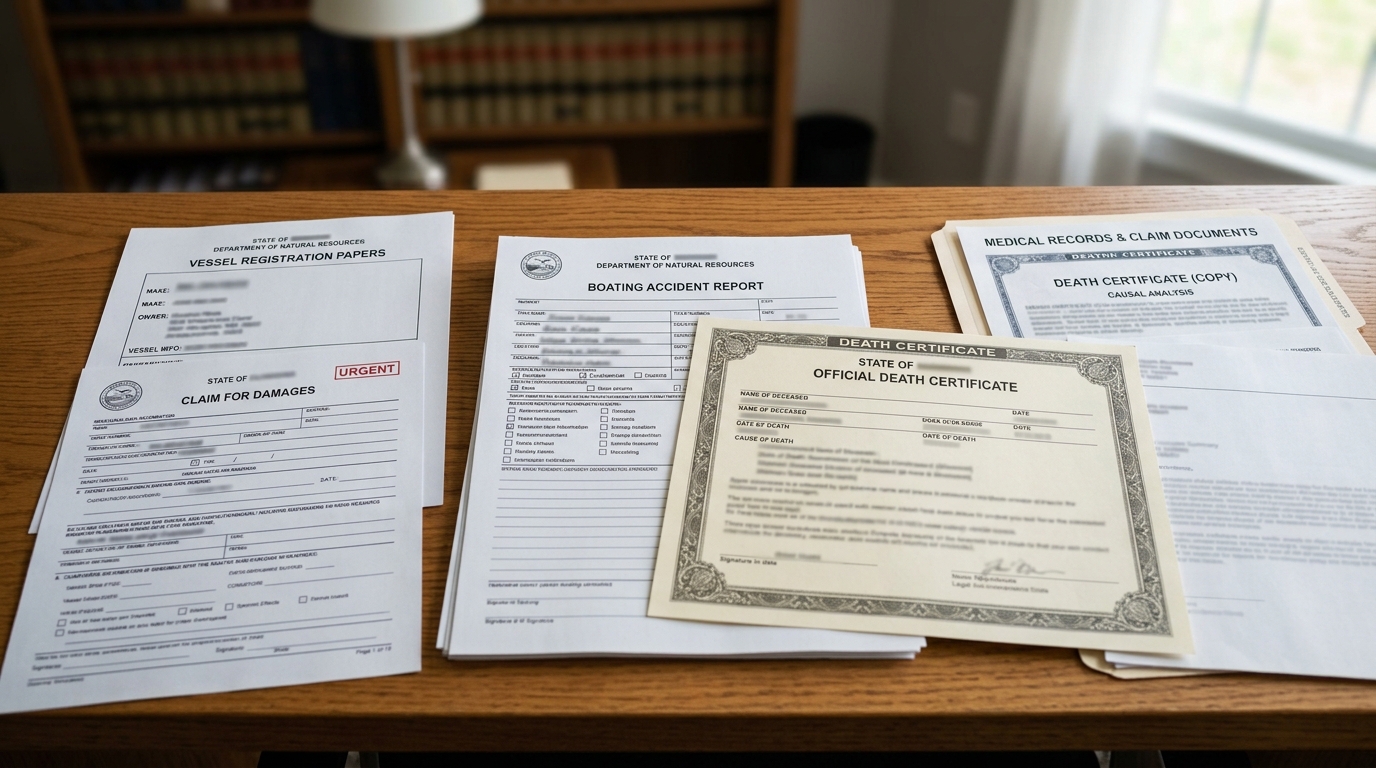
Fatal boating accident claims in New York may involve recreational boats, Jet Skis, rental vessels, marinas, docks, unsafe wake, alcohol use, missing safety equipment, delayed rescue, defective equipment, or negligent vessel operation. These cases require careful review because the person who could explain what happened may no longer be able to speak for themselves. Families reviewing legal options after a fatal watercraft incident may use a boating accident lawyer Long Island resource to understand how liability, evidence, insurance, and wrongful death issues are generally evaluated.
Quick Answer
A fatal boating accident claim in New York usually depends on whether negligence, unsafe vessel operation, missing safety equipment, impaired boating, defective equipment, unsafe rental practices, marina hazards, or delayed rescue caused or contributed to the death. Important evidence may include boating accident reports, police or marine patrol records, witness statements, passenger accounts, vessel ownership records, rental documents, life jacket evidence, GPS data, photos, weather records, emergency response records, medical or autopsy records, and insurance documents.
Key Takeaways
- Fatal boating claims may involve wrongful death, survival claims, boating law, premises liability, product liability, insurance coverage, or public entity rules.
- Potentially responsible parties may include the boat operator, vessel owner, rental company, marina, dock owner, another boater, maintenance provider, product manufacturer, charter operator, or public entity.
- New York wrongful death actions are generally brought by the personal representative of the deceased person’s estate and must usually be started within two years of death under EPTL § 5-4.1.
- New York Navigation Law § 47-B requires written reporting within five days after certain vessel accidents involving death, injury, disappearance under the water, or property damage above the statutory threshold.
- Evidence should be preserved quickly because vessels may be repaired, witnesses may leave, weather changes, and digital data may disappear.
- Public docks, municipal marinas, public vessels, state facilities, or government-controlled locations may involve shorter notice rules.
Why Fatal Boating Accident Claims Are Different
Fatal boating accident claims are different from many other injury claims because the evidence may be limited, fast-changing, and emotionally difficult to collect. The accident may happen on open water, away from surveillance cameras, clear road markings, traffic signals, or neutral observers. Vessels may be moved or repaired. Weather and wake conditions may disappear within minutes. Witnesses may leave the marina before their names are recorded.
These claims may involve:
- Vessel operator conduct
- Vessel owner responsibility
- Rental company records
- Passenger statements
- Marina or dock maintenance
- Personal watercraft rules
- Alcohol or drug impairment
- Life jacket availability
- Emergency response timing
- Product defects
- Public entity involvement
- Insurance coverage disputes
The most important question is usually whether the fatal incident was preventable and whether a person, business, property owner, operator, or other entity failed to act with reasonable care.
Common Fatal Boating Accident Scenarios
Fatal boating accidents can happen in many different ways. The exact scenario affects liability, evidence, reporting duties, insurance coverage, and claim deadlines.
Common scenarios include:
- Boat-to-boat collision
- Personal watercraft collision
- Passenger ejection
- Person thrown overboard
- Capsizing
- Drowning or near-drowning
- Propeller injury
- Dock collision
- Marina boarding accident
- Unsafe wake incident
- Boating while intoxicated
- Rental boat accident
- Charter or tour boat accident
- Boat sinking or taking on water
- Swimmer, kayaker, or paddleboarder struck by a vessel
- Mechanical failure
- Defective safety equipment
- Delayed rescue after a person enters the water
A fatal claim may involve more than one cause. For example, a passenger may be thrown overboard because of excessive speed, then drown because a life jacket was missing or rescue was delayed.
Wrongful Death and Survival Claims
A fatal accident may involve more than one legal claim. A wrongful death claim generally focuses on losses suffered by the deceased person’s statutory beneficiaries because of the death. A survival claim may involve claims the injured person could have brought had they survived, including certain damages tied to the period between injury and death.
New York EPTL § 5-4.1 provides that a wrongful death action may be brought by the personal representative of the decedent against a person who would have been liable to the decedent if death had not occurred. The statute also states that the action must generally be commenced within two years after the decedent’s death.
Because estate authority, family relationships, damages, and deadlines can affect the claim, fatal accident cases usually require early organization of legal, medical, and insurance records.
Damages in New York Wrongful Death Claims
Wrongful death damages in New York are evaluated under specific statutory rules. EPTL § 5-4.3 refers to fair and just compensation for pecuniary injuries resulting from the death to the people for whose benefit the action is brought. It also identifies reasonable medical, nursing, and funeral expenses as proper elements of damage when applicable.
Potential damages may involve:
- Financial support the decedent provided
- Value of services and support
- Loss of parental guidance in certain cases
- Medical expenses related to the fatal injury
- Nursing or care expenses related to the fatal injury
- Funeral expenses
- Conscious pain and suffering in a survival claim, when supported
- Other legally recoverable losses depending on the facts
New York wrongful death damages can be technical. The exact categories depend on the facts, family relationship, estate status, medical evidence, and applicable law.
Boat Operator Liability
The boat operator is often one of the first parties reviewed after a fatal boating accident. Operators must use reasonable care based on water conditions, traffic, visibility, weather, passengers, speed, and navigation hazards.
New York Navigation Law § 45 requires vessel operators to navigate carefully and prudently, prohibits reckless operation, and restricts speed greater than what is reasonable and prudent under existing conditions and hazards.
Operator negligence may involve:
- Excessive speed
- Reckless turns
- Poor lookout
- Distracted operation
- Boating while intoxicated
- Failure to yield
- Unsafe wake creation
- Operating too close to swimmers, docks, or anchored boats
- Ignoring weather or visibility problems
- Overloading the vessel
- Failure to provide passenger instructions
- Failure to carry or identify safety equipment
- Failure to respond after a person falls overboard
A fatal claim may require review of what the operator did before, during, and after the incident.
Vessel Owner Liability
The person operating the boat may not be the owner. The vessel may have been borrowed, rented, leased, used with permission, operated by a family member, or controlled by a business. Vessel ownership matters because New York law can connect an owner to negligent operation under certain circumstances.
New York Navigation Law § 48 addresses owner liability when a vessel is operated negligently with the owner’s express or implied permission.
Owner-related questions may include:
- Who owned the vessel?
- Did the operator have permission?
- Was permission express or implied?
- Did the owner know the operator was inexperienced?
- Did the owner know the operator had been drinking?
- Was the vessel properly maintained?
- Was the boat overloaded?
- Were enough life jackets aboard?
- Was safety equipment accessible?
- Was the vessel insured?
- Was the vessel used privately, commercially, or as a rental?
Ownership, permission, and insurance records can become central issues in a fatal boating claim.
Rental Boat and Jet Ski Fatal Accidents
Rental boat and personal watercraft accidents may involve both the renter and the rental company. A rental company is not automatically responsible for every accident, but its practices may need review when instruction, maintenance, safety equipment, age verification, weather decisions, or supervision are questioned.
Rental-related evidence may include:
- Rental agreement
- Safety instruction checklist
- Vessel inspection forms
- Maintenance records
- Age and identification records
- Life jacket records
- Employee statements
- Restricted area instructions
- GPS or tracking records
- Dock camera footage
- Weather warning records
- Incident reports
- Insurance documents
A rental claim may become stronger if the company provided unsafe equipment, failed to give required instruction, rented to an unqualified person, ignored unsafe conditions, or failed to maintain records.
A broader boat accident attorney guide may help readers understand why rental, operator, owner, and vessel evidence often overlap in serious watercraft injury claims.
Alcohol and Fatal Boating Accidents
Alcohol and drug impairment can be major liability issues in fatal boating accidents. Impairment may affect judgment, balance, reaction time, lookout, speed control, and rescue response.
New York Navigation Law § 49-A addresses vessel operation while impaired by alcohol or drugs, including operation while intoxicated and related enforcement provisions.
Alcohol-related evidence may include:
- Police or marine patrol reports
- Chemical test results
- Witness statements
- Passenger accounts
- Photos or videos
- Bar, restaurant, marina, or event receipts
- Open container evidence
- Operator admissions
- Emergency responder observations
- Social media posts
- Timeline of drinking before operation
Alcohol evidence does not replace the need to prove causation, but it may help explain unsafe speed, poor lookout, reckless operation, delayed reaction, or failure to rescue.
Life Jackets and Safety Equipment
Life jacket and safety equipment evidence can be central in fatal boating claims. A fatal incident may involve a person who fell overboard, was ejected, became trapped, was injured before entering the water, or could not reach safety.

Safety equipment issues may include:
- No life jacket available
- Life jacket not properly sized
- Life jacket damaged or unusable
- Life jacket not accessible
- Passenger not told where safety equipment was located
- Missing throwable flotation device
- Missing sound-producing device
- Defective ladder or reboarding device
- Defective engine cut-off switch
- Poor emergency signaling equipment
- No clear rescue plan
A claim may ask whether proper equipment was aboard, whether passengers were instructed, whether equipment was usable, and whether missing equipment affected the outcome.
Drowning, Delayed Rescue, and Emergency Response
Many fatal boating cases involve drowning or delayed rescue. The investigation may focus on why the person entered the water and what happened immediately afterward.
Important questions include:
- When did the person enter the water?
- Was the person thrown, ejected, or forced into the water?
- Was a life jacket worn?
- Was a life jacket available?
- Did the operator stop immediately?
- Did passengers know what to do?
- Was flotation thrown?
- Was the person visible?
- Was emergency help called promptly?
- Did the vessel have a ladder or reboarding device?
- Did alcohol, darkness, weather, wake, or speed delay rescue?
- Were CPR or rescue efforts attempted?
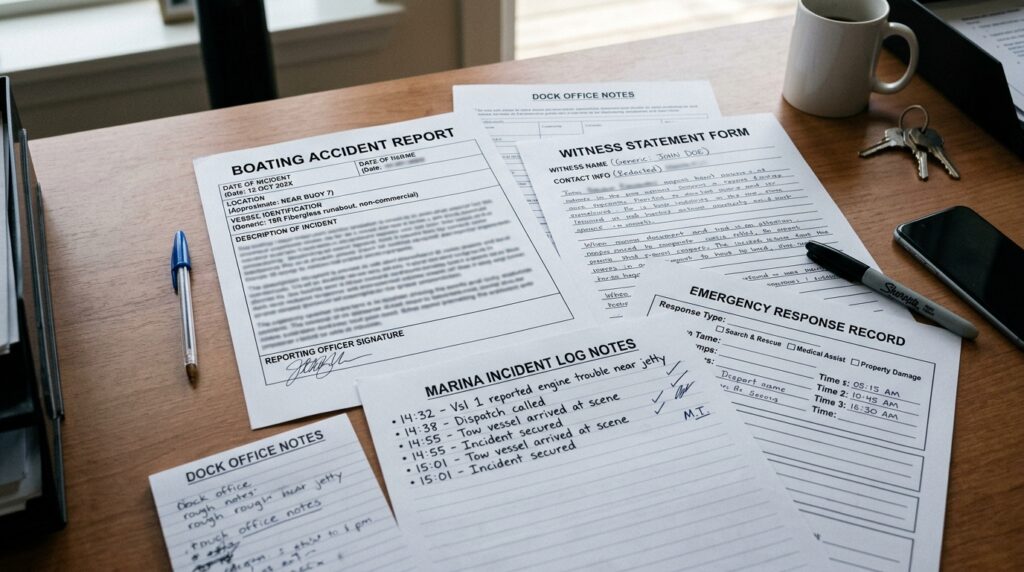
Emergency call records, passenger statements, GPS data, accident reports, medical records, and autopsy records may all help reconstruct the timeline.
Marina, Dock, and Waterfront Fatal Accidents
Some fatal boating-related incidents happen at marinas, docks, boat ramps, fuel docks, public launches, piers, slips, or waterfront properties. These cases may involve premises liability as well as boating law.
Potential hazards may include:
- Broken dock boards
- Poor lighting
- Missing handrails
- Slippery surfaces
- Unsafe ladders
- Unmarked dock edges
- Defective gangways
- Loose ropes or cables
- Fuel or oil spills
- Electrical hazards
- Unsafe boat ramps
- Poorly secured vessels
- Unsafe rental staging areas
- Lack of warning signs
A premises liability attorney resource may help explain how property control, notice, inspection records, repairs, and maintenance practices can affect dock and marina injury claims.
Defective Vessel or Equipment Claims
Some fatal boating accidents involve mechanical failure, defective equipment, or poor maintenance. A vessel may lose steering, fail to respond to throttle control, have faulty navigation lights, take on water, or suffer a critical engine or fuel system failure.
Potential defect or maintenance issues may include:
- Steering failure
- Throttle malfunction
- Engine failure
- Fuel system defect
- Electrical defect
- Defective navigation lights
- Defective personal watercraft controls
- Faulty engine cut-off switch
- Defective life jacket
- Broken ladder or railing
- Poor prior repair work
- Missing maintenance records
- Failure to inspect before rental or charter use
The vessel and damaged parts should be preserved when mechanical failure or product defect is suspected. Repairs or disposal can make the claim harder to prove.
Accident Reporting After a Fatal Boating Accident
A fatal vessel accident must be documented properly. New York Navigation Law § 47-B requires a written report within five days when a vessel accident involves death, injury, disappearance under the water, or property damage above the statutory threshold.
A boating accident report may help document:
- Date and time
- Waterway or marina location
- Vessel information
- Operator information
- Owner information
- Passenger information
- Injury, death, or disappearance details
- Property damage
- Weather and water conditions
- Witnesses
- Law enforcement involvement
- Emergency response information
A report is not the complete claim, but it can preserve important facts before memories fade or evidence changes.
Evidence That Can Strengthen a Fatal Boating Claim
Fatal boating claims are evidence-heavy. The strongest claims usually connect the accident mechanism, responsible party, safety failure, death, damages, and insurance coverage through records.
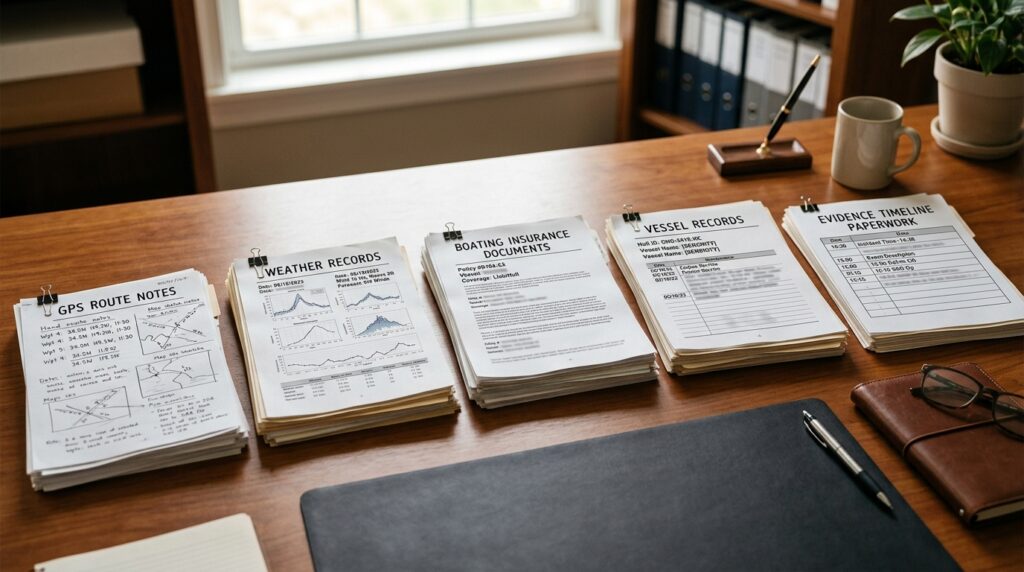
Helpful evidence may include:
- Boating accident report
- Police or marine patrol report
- Emergency response records
- 911 call records
- Witness names and contact information
- Passenger statements
- Photos of the vessel
- Photos of safety equipment
- Photos of dock or marina conditions
- Vessel registration records
- Operator information
- Owner information
- Rental documents
- Marina records
- Maintenance logs
- GPS or chartplotter data
- Phone photos and videos
- Weather and water condition records
- Alcohol-related evidence
- Medical records
- Autopsy records, when applicable
- Death certificate
- Insurance documents
- Expert inspection findings
For broader documentation planning, readers may review how evidence for personal injury claims can help connect the incident, injury, responsible parties, and damages.
Medical, Autopsy, and Emergency Records
Medical and emergency records can help show how the death occurred and whether the person survived for any period after injury. These records may also help distinguish between immediate death, drowning, trauma, hypothermia, cardiac events, head injury, internal injury, or other contributing causes.
Important records may include:
- Emergency medical services records
- Emergency room records
- Hospital records
- Intensive care records
- Imaging reports
- Respiratory treatment records
- Neurology records
- Death certificate
- Autopsy report, when available
- Medical examiner records
- Toxicology records
- Rescue or recovery reports
These records may be important for causation, wrongful death damages, survival claims, insurance review, and expert evaluation.
Insurance Coverage After a Fatal Boating Accident
Insurance coverage can be complicated after a fatal boating accident because several policies may apply. Coverage may depend on vessel ownership, operator permission, rental agreements, commercial use, marina involvement, alcohol exclusions, public property, or product defects.
Potential insurance sources may include:
- Boat insurance
- Vessel owner policy
- Homeowner’s insurance
- Umbrella or excess coverage
- Rental company insurance
- Marina liability insurance
- Charter or commercial vessel insurance
- Product liability coverage
- Maintenance contractor coverage
- Public entity coverage in limited cases
Insurance companies may dispute permission, exclusions, intoxication, commercial activity, vessel condition, causation, damages, or whether a specific policy applies.
Public Entities and Government-Controlled Locations
Some fatal boating accidents involve public docks, municipal marinas, public launches, public vessels, state parks, public waterfront facilities, public authorities, or government-controlled areas. If a public corporation or government-related entity may be involved, shorter notice rules may apply.
New York General Municipal Law § 50-E generally requires a notice of claim within 90 days when notice is required for certain tort claims against public corporations.
This makes the exact location important. A fatal incident near a public dock, public launch, municipal marina, state park, public vessel, or public authority facility should be reviewed early.
Comparative Fault and Defense Arguments
Defendants and insurers may argue that the deceased person or another party shared responsibility. These arguments can be difficult and sensitive, but they are common in serious accident claims.
Possible defense arguments may include:
- The person failed to wear a life jacket.
- The person ignored safety instructions.
- The person entered the water voluntarily.
- The person drank alcohol.
- The person stood in an unsafe place.
- The person distracted the operator.
- Weather caused the accident.
- Another vessel caused the incident.
- The injury was not preventable.
- The operator did not have permission to use the vessel.
- The rental company gave proper instructions.
These arguments should be evaluated against the full evidence. Passenger statements, GPS data, safety equipment records, vessel condition, weather reports, accident reports, and witness accounts can help clarify what actually happened.
Deadlines for Fatal Boating Accident Claims in New York
Deadlines can be strict in fatal accident cases. EPTL § 5-4.1 generally requires a New York wrongful death action to be commenced within two years after the decedent’s death.
Other deadlines may also apply. Product liability, survival claims, public entity notices, insurance notices, accident reporting, probate or estate issues, and evidence preservation can all create timing concerns.
If a public entity is involved, New York General Municipal Law § 50-E may require a notice of claim within 90 days in certain claims against public corporations.
Because timing can vary based on the responsible party and claim type, fatal boating claims should be reviewed as early as possible.
Common Mistakes After a Fatal Boating Accident
Some mistakes can make a fatal boating accident claim harder to investigate.
Common mistakes include:
- Waiting too long to preserve vessel evidence
- Not identifying the operator and vessel owner
- Not collecting passenger and witness information
- Not preserving life jacket evidence
- Allowing the vessel to be repaired before inspection
- Not saving rental or marina records
- Not requesting accident reports
- Not preserving GPS, phone, or chartplotter data
- Not documenting weather and water conditions
- Not identifying public property involvement
- Not organizing emergency response records
- Waiting too long to address estate authority
- Speaking casually with insurance adjusters
- Missing public entity notice deadlines
- Waiting too long to review wrongful death deadlines
A strong claim usually depends on early evidence preservation, careful record collection, estate organization, and identification of every potentially responsible party.
When Legal Guidance May Be Useful
Legal guidance may be useful after any fatal boating accident involving disputed responsibility, missing safety equipment, alcohol, a rental vessel, a Jet Ski, public property, marina hazards, delayed rescue, defective equipment, or unclear insurance coverage.
A fatal boating claim may require review of wrongful death law, survival claims, accident reports, vessel ownership, operator conduct, life jacket evidence, emergency response records, medical records, autopsy records, rental documents, marina records, insurance policies, public entity rules, and deadlines.
People researching local support may review a Farmingdale legal office location when looking for Long Island fatal boating accident claim information. Publicly available personal injury case results may provide general context, although every claim depends on its own facts, evidence, damages, insurance coverage, and applicable law.
FAQs About Fatal Boating Accident Claims
Who can file a wrongful death claim after a fatal boating accident in New York?
Under New York EPTL § 5-4.1, a wrongful death action is generally brought by the personal representative of the deceased person’s estate. The claim is brought against a party who would have been liable to the deceased person if death had not occurred.
Who can be liable for a fatal boating accident?
Potentially liable parties may include the boat operator, vessel owner, rental company, marina, dock owner, another boater, maintenance provider, product manufacturer, charter operator, public entity, or other party whose conduct contributed to the fatal incident.
What evidence is important in a fatal boating accident claim?
Important evidence may include boating accident reports, police reports, emergency response records, witness statements, passenger accounts, vessel records, life jacket evidence, GPS data, rental documents, marina records, photos, weather records, medical records, autopsy records, and insurance documents.
How long does a family have to file a wrongful death claim in New York?
New York EPTL § 5-4.1 generally provides a two-year deadline from the date of death for wrongful death actions. Other deadlines may apply depending on public entity involvement, product claims, accident reporting, insurance notice, or survival claims.
Does missing safety equipment matter in a fatal boating claim?
Yes. Missing, damaged, inaccessible, or improperly sized safety equipment may matter when it contributed to the fatal outcome. Life jackets, throwable flotation devices, sound signals, emergency equipment, ladders, and engine cut-off devices may all need review.
Final Thoughts
Fatal boating accident claims in New York require careful investigation because the most important evidence may involve vessel operation, owner permission, life jacket availability, rental records, marina conditions, emergency response, weather, alcohol evidence, and insurance coverage. The strongest claims usually depend on prompt reporting, preserved vessel evidence, witness statements, medical or autopsy records, estate documentation, and a clear timeline showing how the fatal incident happened and whether it could have been prevented.